


So far, in the Heath brothers’ SUCCESs model of what it takes to make ideas and messages stick, we’ve looked at:
- S: The importance of simplifying to the core
- U: Grabbing people’s attention, and keeping it, through the unexpected
- C: Making ideas concrete through bringing ideas to life and using sensory language.
That’s all well and good. But why should your audience believe you?
The second C of SUCCESs stands for Credibility.
Boost cred to make ideas stick

[Image source: westlaketrialconsulting.com]
People tend to believe other people with authority. That could be you, or it could be someone else – an external authority.
For example, with my credentials as a copywriter and trainer, I could tell you it’s important to clean your teeth every day.
Don’t believe me? Not surprising (nor do my kids). My authority is in a different arena.
But if I tell you 9 out of 10 dentists say cleaning your teeth is important, that has impact.

[Not a lollipop. Image source: wgoins.com]
So, too, with your message. Do you have the authority to be credible, or will you need an external authority?
Let’s say you’re introducing a new compliance process for workplace safety. Is it enough that you say the process has to be applied? How much more powerful if you say ‘According to Safe Work Australia, 17 workers died in similar accidents in 2015’.
Credibility is a key ingredient in getting your message believed, remembered and actioned. You have to boost cred to make ideas stick.
Here are three ways to boost the credibility of your messages:
1. Authorities vs. anti-authorities
An authority to give your message believability could be:
- You: if you have the credibility
- An external source: a quote, expert source or testimonial
- An anti-authority: someone who hasn’t implemented the idea, and suffered as a result.
The first two are simple enough. Perhaps the third option is more surprising.
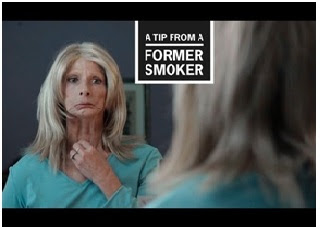
[Image source: YouTube Centers for Disease Control and Prevention, Terrie’s ad]
Examples of using an anti-authority would be:
- a smoker dying from cancer saying smoking is dangerous
- someone in a wheelchair promoting a new workplace safety initiative
- an organisation that went bankrupt because it ignored ethical issues.
You’ll find plenty of examples of anti-authorities. They can have great impact as examples of what can happen if people don’t apply the right guidelines or processes.
For example, Kodak has almost disappeared as a brand because they didn’t invest in future technology. They were complacent.
And the Sydney Opera House would be just a building site if further funds to develop the plans weren’t found.
History is littered with examples you can use of what happens when action isn’t taken. A negative image and story – an anti-authority – can often be a powerful motivator.
2. Statistics count
Cancer kills 2 out of 3 Australians. 9 out of 10 bosses make decisions based on facts. 7 out of 10 doctors recommend exercise for depression.
Whether those facts are correct or not (Google them to see!), statistics do a great job of providing proof and credibility.
What facts and figures do you have? What could you dig up? Can you use them to persuade?
As they say, you can’t argue with facts! (While that’s true, you often need more than just facts, as you’ll see in the section on Pathos/Heart in my post here.)
3. Frank Sinatra

[Image source: fansshare.com]
In Ol’ Blue Eyes’ famous hit, New York, New York, Frank sings ‘If I can make it there, I can make it anywhere.’
It’s a good rule of credibility: if your suggestion, product or service has succeeded elsewhere, saying so adds weight to your proposal.
Think of the classic line, ‘As used by NASA’. Well, with all their money and resources, surely they’d pick only the best? Your association with another client or user of a product/service can seriously boost your cred.
Find out if the product or service has been successfully used elsewhere, if any contractors have implemented a similar solution, or simply Google to find similar solutions.
Once you’ve surprised and engaged your audience, back it up. Make sure they have good reason to believe you. Statistics, testimonials and case studies are ideal ways to do this.
Do your homework and find the facts to support your case.
NEXT: You’ll be happy, excited, inspired and overjoyed to hear our next ezine in the SUCCESs series, the ‘E’, covers the powerful role Emotions play in making messages stick. Don’t be sad; it’ll be on our blog page soon!

Paul & the Magneto/Credosity Team
#writeyourfuture
P.S. Here’s a good statistic: You spend up to two-thirds of your week writing, so your effectiveness hinges on how good a writer you are. Great writers get promoted. Lousy writers don’t. Check out our courses, starting 12 February 2016!
P.P.S. Have you tried Credosity? It’s our just-in-time productivity and learning tool for Microsoft Word. Use it to be a better, sharper communicator. Here’s an anti-authority testimonial: ‘Maybe I’d still have a job if I’d used Credosity.’ Start your free trial now!
1 thought on “Making Ideas Stick (4/6): Without cred, you’re dead”
Pingback: Made To Stick (5/6): Use emotion to engage