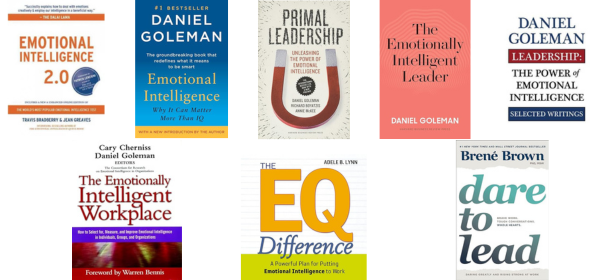
Here are some of the best business books that explore the concept of emotional intelligence (EQ) and how it can be applied in professional settings:
1. “Emotional Intelligence: Why It Can Matter More Than IQ” by Daniel Goleman
Overview: This is the seminal book that popularised the concept of emotional intelligence. Goleman explains how EQ affects various aspects of life, including work performance, leadership, and relationships. He outlines the five core components of EQ: self-awareness, self-regulation, motivation, empathy, and social skills.
Why It’s Important: It offers foundational knowledge on how emotional intelligence can be more critical than traditional IQ in achieving success, especially in leadership and team dynamics.
2. “Primal Leadership: Unleashing the Power of Emotional Intelligence” by Daniel Goleman, Richard Boyatzis, and Annie McKee
Overview: This book takes the principles of EQ and applies them directly to leadership. The authors introduce the concept of “resonant leadership,” where leaders use EQ to inspire and engage their teams.
Why It’s Important: It provides practical insights for leaders on how to use EQ to build trust, drive performance, and create a positive organisational culture.
3. “The EQ Difference: A Powerful Plan for Putting Emotional Intelligence to Work” by Adele B. Lynn
Overview: This book focuses on practical ways to develop and apply emotional intelligence at work. It provides exercises, assessments, and case studies to help readers enhance their EQ.
Why It’s Important: It serves as a guide for professionals looking to improve their EQ skills in everyday business interactions, from managing teams to dealing with difficult colleagues.
4. “Emotional Intelligence 2.0” by Travis Bradberry and Jean Greaves
Overview: This book includes strategies for enhancing EQ and provides an online assessment to help readers identify their strengths and areas for improvement. It offers practical advice for applying EQ skills in real-world situations.
Why It’s Important: It’s straightforward, actionable, and includes a self-assessment, making it a useful tool for anyone seeking to improve their emotional intelligence skills.
5. “The Emotionally Intelligent Leader: How to Build Effective Leadership and Navigate Through Complexity” by Daniel Goleman
Overview: This is a collection of Goleman’s writings on emotional intelligence in leadership, drawing from his previous works but presented in a focused format on leadership. It includes insights on how EQ can drive decision-making, resilience, and innovation.
Why It’s Important: It’s specifically tailored for leaders, offering insights on how EQ can be leveraged to lead effectively in complex environments.
6. “Dare to Lead: Brave Work. Tough Conversations. Whole Hearts.” by Brené Brown
Overview: While not solely about emotional intelligence, this book focuses on the importance of vulnerability, empathy, and courage in leadership. Brené Brown’s work connects deeply with the principles of EQ by encouraging leaders to build authentic and trusting relationships.
Why It’s Important: It provides a fresh perspective on how qualities like empathy and self-awareness (key elements of EQ) can be essential for effective leadership.
7. “Leadership: The Power of Emotional Intelligence” by Daniel Goleman
Overview: This book compiles Goleman’s key articles on the role of EQ in leadership, originally published in Harvard Business Review. It includes some of his most influential works, such as ‘What Makes a Leader?’ and ‘The Focused Leader’.
Why It’s Important: It offers a concise overview of how EQ impacts leadership, with practical insights and examples from the business world.
8. “The Emotionally Intelligent Workplace: How to Select for, Measure, and Improve Emotional Intelligence in Individuals, Groups, and Organizations” edited by Cary Cherniss and Daniel Goleman
Overview: This book takes a more academic and research-driven approach to understanding how emotional intelligence can be integrated into organisational practices. It includes case studies, frameworks, and tools for assessing and developing EQ within teams.
Why It’s Important: It’s valuable for HR professionals, managers, and leaders who want to cultivate an emotionally intelligent culture within their organisations.
These books provide a comprehensive look at how emotional intelligence can be developed and leveraged in business settings, from personal development to leadership and organisational culture. They offer both foundational theories and practical strategies, making them valuable reads for professionals at all levels.