

KISS me: Keep It Simple, Simon
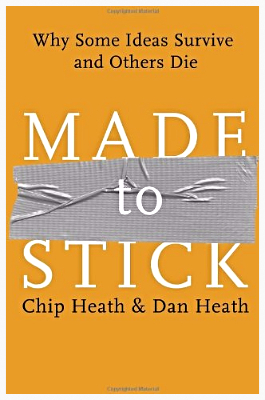
If you haven’t read ‘Made to Stick’, it’s time you did.
Your success at work depends on how well you can get attention for your ideas, and make them stick in your readers’ minds.
In the next six newsletters, I’ll apply the Heath brothers’ ‘sticky’ ideas to your writing at work. Their research shows that ideas stick best with the SUCCESs formula:
- Simple
- Unexpected
- Concrete
- Credible
- Emotional
- Stories
Let’s kick it off with ‘Simple‘:
Saved by simplicity
Last year a client told me his team went to the BIG boss to ask him to approve their project. They’d worked on it for months, and had a 40-slide presentation to convince him.
But after their pitch, he said no.
When they glumly told my client, he exploded: ‘What?! But he needs this project as much as we do!’ He said, ‘Show me your slide deck.’
Of the 40 slides, he took just four, and raced into the big boss’s office. He laid the slides down, and explained the project and its benefits simply and clearly.
The big boss said, ‘Oh! I didn’t realise that. Okay, it’s a yes!’
Trim the fat
Want to simplify? Cut the excess. Trim your message to its core. Complexity loses. Simplicity wins.
‘If you can’t explain it simply, you don’t understand it well enough.’
Albert Einstein

Image source: funnyhub.com
It’s a good reminder that we tend to over-complicate things, especially when it comes to writing. We want our boss, colleagues and clients to appreciate just how smart we are. That’s why we get paid the big bucks, right?
So we write long presentations. Long reports. Long emails. With lots of words. And the bigger the words, the better.
But your readers are in an infobesity epidemic: Bain & Co. found that business people got around 1000 external communications in 1970. But this mushroomed to 30,000 in 2014.
It also turns out that using long words needlessly makes people think you’re dumber, not smarter.
Which is why ‘Simple’ is key to your ideas sticking:
Cut through the clutter, don’t add to it.
What’s the one thing you want to communicate? What’s at the core of your idea?
Oh, I can hear you now: ‘It’s ALL important!’
Yes, but ‘all’ may mean ‘nothing’, as in the exec above who said no to the 40 slides then yes to the four.
WWJD? (What Would Jobs Do?)
Steve Jobs mastered this.
He sailed through the IT industry’s sea of jargon with simplicity.
Here’s how NOT to do it — this, from the Pentagon, is apparently the most complicated PowerPoint slide in history:
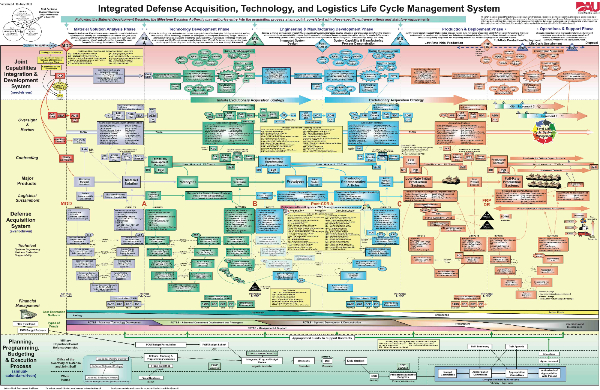
Image source: www.wired.com
It’s easy to see how this sort of presentation slide gets produced. There’s a complicated story to tell. Let’s make it simple by putting it all on one slide. There you go: at a glance!
But what did Steve Jobs do?
He cut to the core, focusing on the ONE thing he wanted his audience to remember.
When launching the MacBook Air, it was all about how thin it was. So he introduced it like this:
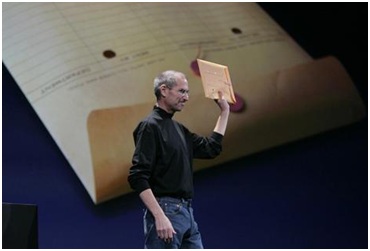
Image source: Associated Press, smh.com.au
He simply showed a picture of an inter-office mail envelope. And put a MacBook Air inside one.
Point made. And the crowd went wild.
He could so easily have decided its screen size was also very, very important. As was its RAM. Its battery life. How much of it was recyclable. Its price.
But he didn’t. He focused on its incredible thinness. Everything else can be filled in later.
Besides the principles above, here are three simple ways to keep your messages, well, simpler:
1. Big news first
If you were your audience, what would be the most important to you? What’s new? What’s at stake?
One of my uni professors said to imagine your reader is in a lift, and the doors have started closing. In your whole document, what’s the ONE thing you’d shout to them before they’re gone?
‘We’re over budget!’
‘We need a new machine!’
‘Your husband ran off with the babysitter!’
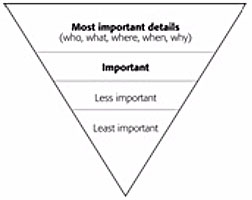
Think about the one thing you need to get across — the most important, the news, the thing they don’t know. Focus on that. Lead with that.
It’s called the Inverted Pyramid style of writing, championed by journalists across the world:
2. Generative analogies
Once you’ve settled on your one key thought, you need to communicate it. A generative analogy — a metaphor that generates new yet familiar ideas in your audience’s mind — works well.
Let’s say you’re applying for a new job. You could say you’re the Leonardo da Vinci of Human Resources: A multi-talented resource able to turn your hand successfully to most things.
Or maybe your big project is over budget. It could be your company’s Sydney Opera House: over budget and running late, but it’ll be a prized and irreplaceable icon for many years.
Analogies help you communicate complicated ideas more easily.
3. Be brutal
Not ‘brutal’ in what you write, but in what you cut.
‘Kill all your darlings.’
William Faulkner
Be like Steve Jobs. Kill anything that isn’t 100 percent new information. Shave it down to the barest thought. It’s not easy; it’s hard. But it’s what separates great writers from average ones: they do the work.
Keeping it simple is a critical skill for you at work. Whether an email, report, job application or presentation, the simpler you make it, the more likely it is to stick.
It’s not about dumbing down. It’s about smartening up through focus.
Next up: the U of SUCCESs … Unexpected!
Paul and the Magneto/Credosity team
P.S. Have you tried Credosity? It’s a super-simple, but super valuable writing tool for Microsoft Word. Make sure you at least take a peek.
2 thoughts on “Making Ideas Sticky (1/6): Keep It Simple”
Pingback: Bypass apathy by making abstract ideas concrete
Pingback: Made to Stick (5/6): Use emotion to engage - Magneto Blog