


Had your sugar hit yet?
In 2010, the famous UK chef, Jamie Oliver, gave a TED talk entitled ‘Teach every child about food’.
To show the amount of sugar in a child’s diet, he brought on a wheelbarrow with the amount of sugar one child would consume in milk drinks alone in five years of elementary school. Then he dumped it on stage.
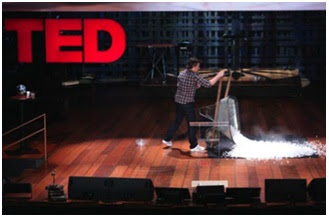
[Image source: TED]
What he did was take an abstract idea (‘we eat too much sugar’) and made it concrete. The recent Aussie flick, ‘That Sugar Film‘, builds a similar, powerful case for eating less sugar.
Why should you care about making abstract ideas concrete? Because they’re great demonstrations of how to make your ideas stick. They engage the ‘Made to Stick‘ book’s third element in its SUCCESs formula: Concreteness.
‘Concrete’ means something your senses can detect or describe. Experiments show that people are more likely to remember concrete over abstract nouns, e.g. ‘bicycle’ rather than ‘justice’.
Of the six principles in SUCCESs, concreteness is perhaps one of the easiest. (The hardest is probably the first S, ‘Simplicity‘.)
How can you make your simple idea concrete? Like Steve Jobs, with his envelope.
Think about how to bring your presentation, job application or project report to life. Can you use everyday objects, as Jamie Oliver did? Can you turn facts and figures into something tangible?
One powerful way is to show, don’t tell.
[Image source: http://jimbaumerexperience.
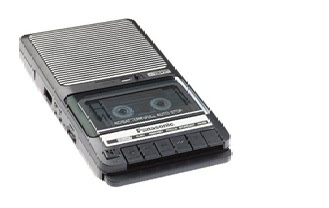
I remember the story of ad-man John Singleton pitching for an airline account. He walked into the presentation with nothing but a tape recorder (this was a few years ago). He pressed ‘play’, and all his audience heard was the sound of a phone ringing, unanswered. He let it play out.
‘How can I help you,’ he said ‘when your reservations team can’t even pick up the phone!’ (naturally he used slightly more colourful language!).
He could have told them they didn’t answer, but it was much more effective to make it concrete.
How can you do the same? Here are three keys:
1. Use sensory language
Aesop’s Fables are thousands of years old. In The Fox and the Grapes, he writes of a frustrated fox trying to reach grapes high on a vine. The fox kept jumping, but failed. Finally it padded away mumbling, ‘I bet they were sour anyway.’
Today, the phrase ‘sour grapes’ is known in most languages. It’s a sensory idea that has stood the test of time.

[Image source: newheavenonearth.wordpress.com
Sensory language helps your reader connect with an image, description, action or scene. It connects to the five senses of sight, sound, smell, taste and touch.
Writing a corporate bio? You could say the exec has military experience in Iraq.
Or you could use sensory language:
‘Our new CEO knows the adrenaline of attack sirens. He’s braced for the blast of Scud missiles, and emptied sweat from his gas mask.’ (Thanks Kate Rein, CopyrightingCleveland.com)
2. Mental pictures
[Image source: usnews.com]
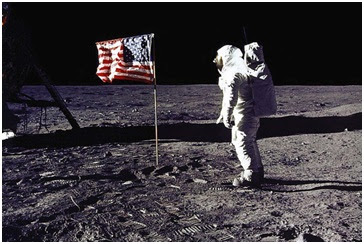
Your brain devotes about a third of its cortex to processing visuals. People love pictures. So paint them for your reader. American president JFK did it wonderfully with his idea of ‘putting a man on the moon’. It seemed impossible, but his vision (see that word?) became reality. It became concrete.
Can you create a solid image in your audience’s mind?
3. The Velcro theory of memory
Velcro works by having lots of tiny hooks. Each fastens into a tiny loop of material. By themselves, they’re weak. But thousands together create a very sticky bond.
The ‘Velcro theory of memory’ says that we try to relate new information to things we already know. The more ‘hooks’, the stronger the connection.
So to make your ideas stick, hook into multiple memory types, e.g. all five senses. Think about people, places, movies, food, events we all grew up with. Can you harness one or more of those to create a connection, making abstract ideas concrete?
Sweet concrete
Making your message more concrete will bring your abstract idea to life. And when you do that, it’s sure to stick in their mind.
Can you think of a good example of making abstract ideas concrete? Please share it in the comments. But grab something sweet first!
Paul & the Magneto/Credosity Team
P.S. Don’t miss my ‘Writing to Influence’ webinar. There’s nothing sweeter than getting ‘yes’ more!
P.P.S. Tried Credosity yet? We’ve just finished a major revamp, based on feedback, and it’s rocking. This Microsoft Word add-in helps you write better. And faster! Take a peek (try it free for a month). See for yourself what everyone else is raving about.
1 thought on “Making Ideas Stick (3/6): The Velcro Theory & sweet concrete”
Pingback: Made to Stick (5/6): Use emotion to engage - Magneto Blog